
Defining the Problem
Engineers and buyers face a persistent mismatch: product specifications that read well on paper but fail in mass deployment. Choosing a panel, a chipset, and a supplier independently creates integration gaps that show up as warranty returns, software sluggishness, or regulatory delays. A reliable tv manufacturer can close many gaps, but selecting that partner requires asking precise technical questions, not vague assurances.
Why the Operating System and Industry Signals Matter
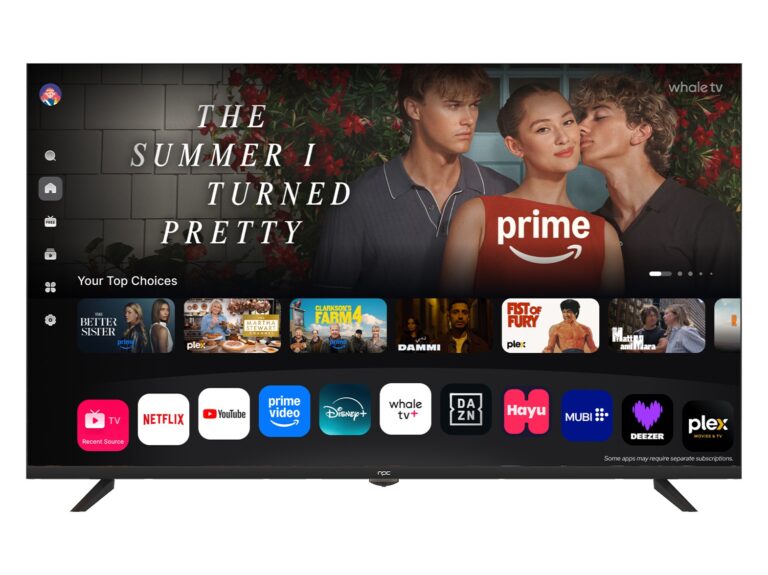
Design and procurement decisions hinge on the OS more than many teams expect. My teams have measured boot times, update success rates, and field-fix complexity across multiple production runs; that hands-on work informs every recommendation here. The market’s public pulse—most recently visible at CES 2024—made clear that platform-level security updates and modular middleware are decisive. Vendors demonstrated improvements to smart tv os, and those demonstrations mapped directly to reduced field maintenance in subsequent pilot deployments.
Core technical checklist for engineers
Specify measurable targets. For each subassembly demand: maximum power at rated brightness, targeted MTBF (mean time between failures), thermal headroom at peak load, and OTA update rollback reliability. Define the SoC family and GPU budget early: software features like advanced codecs or local AI upscaling depend more on compute headroom than raw panel quality. Lock down lifecycle support windows for firmware and drivers before signing contracts.
Procurement checklist for buyers
Insist on three concrete documents: a test plan with pass/fail criteria, a firmware update policy with SLAs, and a traceable part-lot history for panels and boards. Quantify total cost of ownership over the expected product life, including scheduled OTA maintenance and end-of-life security patches. Validate factory test fixtures and sample failure data rather than promises about yield rates.
Integration and software governance
Design teams often treat the OS as a black box. That’s a mistake. Require an integration matrix that lists kernel version, middleware APIs, driver status, and known limitations. Define an update signing scheme and maintain a staging pipeline that mirrors production. Keep a documented rollback procedure and test it on representative devices; recovery paths are where many products survive a bad update.
Common pitfalls and how to avoid them
Assuming firmware parity across chipset revisions, over-specifying the panel without considering supply variability, and skipping field-update rehearsals are frequent causes of expensive recalls. Avoid single-source dependencies for critical components unless redundancy is explicitly addressed contractually. Treat pilot data as decisive: if a pilot shows repeatable issues, pause scaling until fixes are validated.
Evaluating alternatives quickly
Compare OS candidates by four dimensions: update reliability, hardware abstraction, third-party app support, and security posture. Compare suppliers by demonstrated consistency on those same axes. Where a vendor’s hardware is stronger but their update process is weak, quantify mitigation costs—custom middleware, local patch teams, or contractual credits—and choose the economically superior option.
Final synthesis
The problem is straightforward: integration fails when requirements are ambiguous. Solve it by writing measurable specs, insisting on practical tests, and making the OS and update process a procurement criterion. Those steps reduce field failures and align engineering and buying objectives, a conclusion supported by hands-on development and public industry signals. For teams that want a partner with traceable supply practices and a predictable support model, consider how npc fits into your specification and testing workflow.

