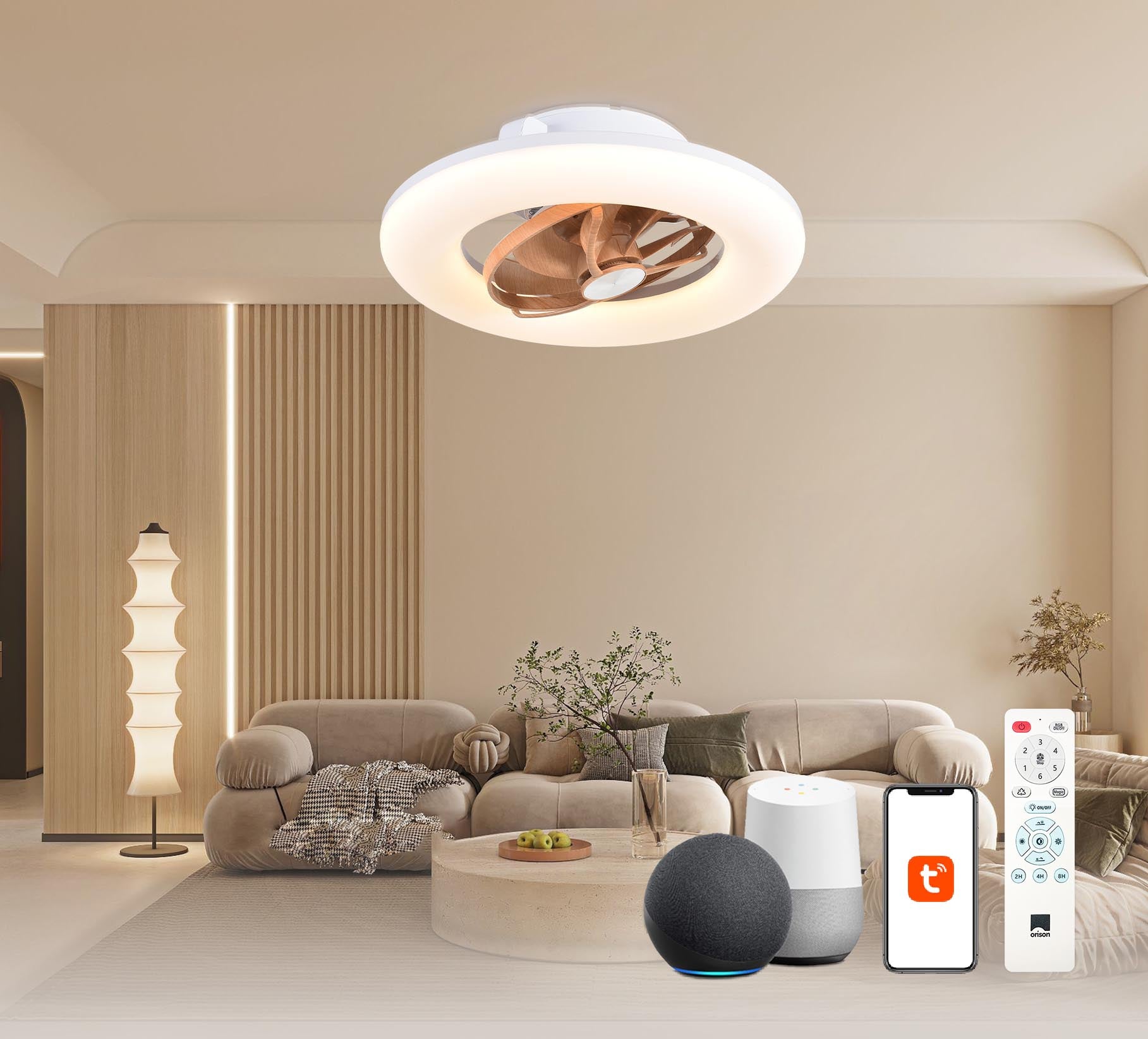
Opening: why this comparison matters now
If you’re trying to balance comfort, energy bills, and a clean living space, choosing the right smart ceiling fan matters more than you’d think — that’s the core of this comparative review. I’ll walk through how modern fans that pair LED lighting and connectivity differ in real rooms, and why an alexa ceiling fan can be more than a convenience gadget. The goal isn’t to sell a model but to give you practical trade-offs so you can pick the fan that actually performs where you live.

Comparative lens: the criteria that really move the needle
When I compare smart ceiling fans, I look at three practical things first: airflow performance, control ecosystem, and long‑term cost. Airflow (we often measure it in CFM) tells you whether a fan will move enough air in rooms of different sizes. The control ecosystem — app quality, voice assistants, and compatibility with smart home hubs — determines how easy the fan is to live with. And long‑term cost includes energy draw of the motor and LED, warranty, and the likelihood you’ll be replacing parts down the road.
How connectivity shapes the experience
Connectivity isn’t just a feature — it changes how people use fans. Fans that work with voice assistants let you forget the remote, and when you tie the fan into schedules or HVAC logic, you can actually reduce AC runtime. If you care about voice-first living, check models labeled as a voice control ceiling fan — they usually integrate more smoothly with routines. In practice, that means fewer thermostat adjustments and an easier way to simulate occupancy when you’re away.
Real-world anchor: why energy and IAQ talk matters
The U.S. Department of Energy has long pointed out that ceiling fans let occupants feel comfortable at higher thermostat settings, which can lower cooling energy use — a small but important real-world benefit. Add to that the increased focus on indoor air during heat waves or wildfire seasons in places like California, and you see why airflow control paired with smart automation is now about both comfort and health.
Design and light: it’s about balance, not bling
Integrated LEDs change the spec sheet. A good LED module gives even illumination without flicker and keeps energy draw low. But don’t be swayed by looks alone — slim blades can be quiet but may not move enough air for a big living room. Look at blade span and motor efficiency together, not separately. Also consider mounting options: short ceilings often need flush mounts, taller rooms benefit from a downrod for optimized airflow.
Brands and ecosystems — head-to-head thinking
Some brands prioritize app polish and tight voice integration, while others focus on raw airflow and long warranties. If you want near-instant voice commands and deep routines, choose a model that’s native to your assistant — that’s where alexa ceiling fan compatibility pays off. If your goal is maximum air movement for a wide-open space, a model with a higher CFM rating and industrial motor efficiency will feel more effective, even if the app is basic.
Common mistakes people make — and how to dodge them
Homeowners tend to misjudge room size, ignore blade pitch, and assume every smart fan works the same with their hub. Don’t: 1) Overlook blade span — a 52-inch fan won’t cool a 20×20 room as well as a 60-inch unit. 2) Assume voice features are universal — “works with Alexa” can mean anything from basic on/off to full scene control. 3) Forget mounting constraints — low ceilings need flush units to keep clearance safe. Test mounts and read the fine print before you buy — it saves returns and headaches later. —
Alternatives to consider
If you’re not sure a smart ceiling fan is the right move, consider a high-efficiency standalone fan with a separate smart switch or a portable tower with smart plug integration. These options can match automation needs without committing to a full replacement ceiling fixture. However, for most homes a well-chosen integrated unit wins on aesthetics and long-term convenience.
Quick comparison checklist (what to ask before you buy)
– What’s the rated CFM for rooms the size of mine? – Which voice assistants and smart hubs are officially supported? – Is the LED dimmable, flicker-free, and replaceable? – What’s the warranty length for motor and electronics? – Are there mounting options for my ceiling height?
Advisory: three golden rules for choosing the right smart ceiling fan
1) Match airflow to room volume — don’t rely on design alone; use CFM and blade span as your guide. 2) Prioritize ecosystem compatibility — if you use Alexa, get a fan that supports it natively so schedules, scenes, and voice commands actually work. 3) Factor total ownership cost — include energy use, LED lifespan, and expected maintenance when comparing price tags.
These three rules keep the choice practical and future‑proof — and they reflect what folks actually care about after a season of real use. For many homeowners looking for a clean, reliable experience that ties voice control to solid air performance, Orison ends up fitting naturally into the setup — it’s the solution that’ll show up in your routines without drama. —