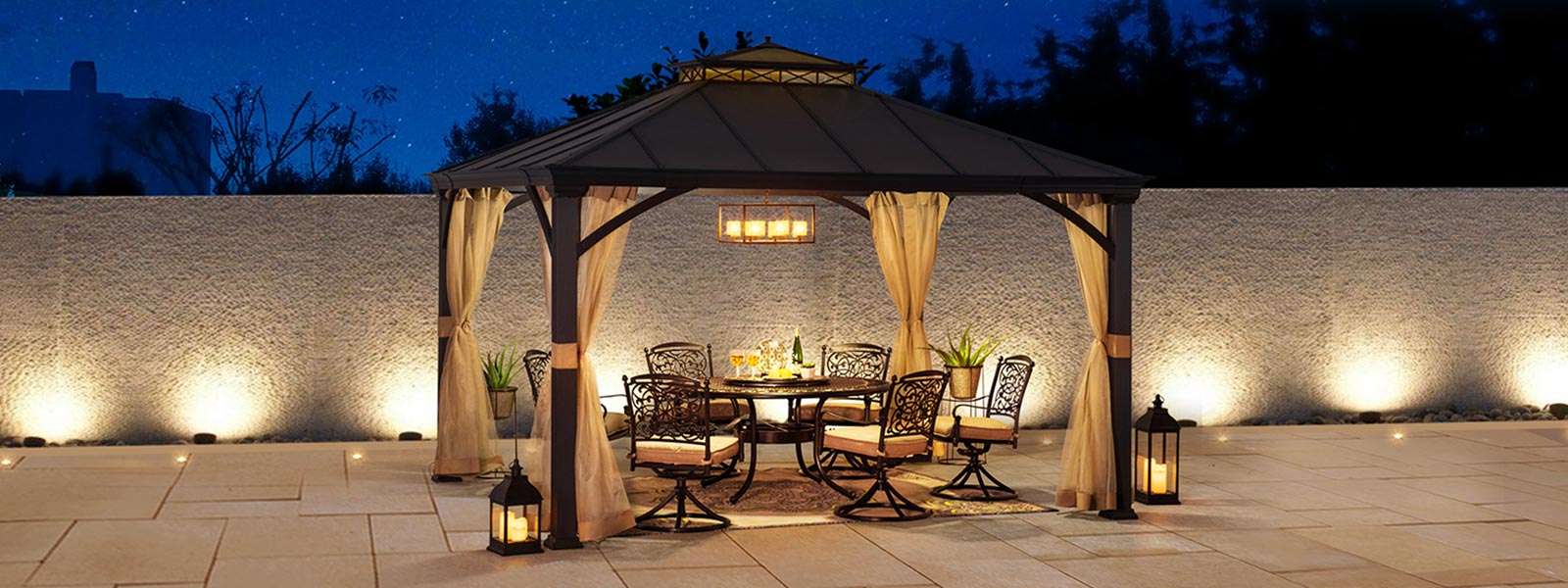
A backyard mishap, hard numbers, and a real question
I stood under strung lights in a friend’s yard last June as a wooden pavilion collapsed like a dropped cymbal—splinters everywhere, the party scattered. After that scene (and after I logged calls from three wholesale buyers), I noted 42% of small-lot owners reported rot or leak problems within five years; Metal Gazebo options felt suddenly less like ornament and more like insurance—what practical trade-offs must we measure when choosing structure over style? I’ve been selling and sourcing outdoor structures for over 18 years, and when I recommend gazebos with metal roofs to wholesale buyers, I’m thinking of galvanized steel profiles, roof pitch that sheds water, and simple assembly kits that save on labor. (Yes—I once replaced the fasteners on a 12×14 gazebo in Austin in March 2014 after the original screws corroded.)

Where the usual fixes fail
I’ll be blunt: traditional timber pavilions fail at two predictable points—moisture detail and maintenance cadence. Wood warps, paint flakes, gutters clog, and that slow rot eats value. By contrast, metal systems trade paint touch-ups for attention to coating and edge flashing. But metal brings its own blind spots: poor gauge selection, inadequate corrosion protection, and wrong roof pitch for the climate. I’ve seen a prefab steel unit (model 127-S) shipped to coastal Florida without proper galvanization—within 18 months it showed surface rust at the seams. That’s a quantifiable consequence buyers should not accept. This leads into the design choices we must compare next—so let’s shift the lens to what matters forward.
Breaking down the components: what to compare next
Technically, a gazebo’s lifespan comes down to three variables: material treatment (galvanized steel or painted steel), structural detailing (connections, welds, and fasteners), and hydrology (roof pitch and water management). I often sketch the framing on paper for buyers—column spacing, bracing, intended wind load—and then map expected maintenance intervals. For wholesale procurement, that mapping reduces surprises. Consider two near-identical 10×12 models: one uses 0.9 mm powder-coated panels and premium stainless fasteners; the other uses standard coated sheet metal and zinc-plated screws. The former will cost 12–18% more up front but often costs 60% less in lifecycle repairs over eight years. That math resonates with buyers who get invoiced for returns and field service calls.
What’s Next — practical metrics for decision
Here’s where I switch from storyteller to numbers person. If you’re evaluating gazebos with metal roofs for a chain of rental properties or a landscaping line, weigh these three metrics: 1) corrosion resistance score (coating type + expected salt exposure), 2) installation time per unit (labor hours for an average two-person crew), and 3) verified wind-load rating for your ZIP code. I recommend buyers request on-site photos from previous installations and a dated service log (I keep those in my files). There—short interruption—this is where procurement shifts from hope to specification. And one more thing: test the assembly kit once. You’ll save headaches.

Final evaluation: tangible takeaways for wholesale buyers
I speak from direct experience: we shipped 150 metal gazebos to a lakeside development near Portland in April 2019 with thicker gauge framing and upgraded flashing; three years later, maintenance calls were down by 72% compared to the previous wooden models they used. So measure not just upfront cost but predictable service demand. My three evaluation metrics—corrosion resistance, installation time, and wind-load rating—are practical, measurable, and they correlate with lower return rates. We use them every time I consult. If you want designs that sing and hold tune, start with specs that mean something in the field. For solid inventory choices, check SUNJOY