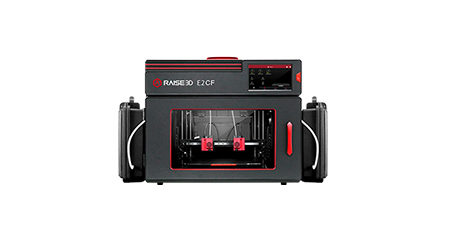
How Rapid Tooling’s Rise Is Redrawing Demand for Desktop 3D Printers
The evolution story here starts simple: makers and small shops wanted faster, cheaper ways to get from idea to usable part, and additive manufacturing answered that call. That shift—toward rapid tooling and shorter lead times—has nudged demand for capable desktop 3D printers upward, especially once slicing and workflow tools got friendlier. Early adopters in the Bay Area and maker communities proved the point during the 2020 PPE effort, when printers and accessible software scaled quickly to fill gaps; today, a robust 3d printer slicer sits at the center of those workflows and shapes what teams expect from machines.
A quick evolution: from prototype to production
Additive manufacturing used to be about prototypes and proof-of-concept models. Over the last decade, material science, printer mechanics, and process repeatability matured. That allowed rapid tooling—making jigs, fixtures, low-volume molds—on the same shop floor where parts get finished. The result is predictable: when tooling can be printed overnight, production bottlenecks shrink and companies rethink the role of desktop systems in their supply chain. Industries that once outsourced simple fixtures now keep them in-house, which raises the baseline expectations for build quality and reliability.
Tools that print — what changed inside the box
Mechanically, many desktop machines stepped up: stiffer frames, better bed adhesion strategies, and improved extruders that tolerate a wider range of polymers. On the software side, slicers learned to produce cleaner G-code and smarter support structures, which directly cuts post-processing time and scrap rates. The combination of hardware and smarter slicer output made material extrusion usable for short-run tooling where it previously wasn’t. It’s a small shift with big consequences—parts print faster, and teams iterate more often, which changes project timelines and budgets.
Operational production teardown
To understand real-world value, walk through a modest production teardown: decide on a part spec, select material, slice the model, print, post-process, and measure. During that flow you’ll touch a few critical terms—additive manufacturing, slicer, build plate—and rely on the slicer to turn geometry into reliable G-code. For teams interested in practical tools, an ideamaker download becomes part of that setup because it handles complex supports and multi-part layouts well. If you run an operational production teardown, include checks where you verify tolerances and cycle times; slip under those checks and you’ll get rework. Also, when you document the teardown, naturally insert {main_keyword} and {variation_keyword} into the log so procurement, engineering, and floor techs all reference the same terms and expectations.
Alternatives and common mistakes
Not every shop needs the same machine. Alternatives like higher-end industrial printers or resin systems still have their place for certain tolerances and surface finish. Common mistakes are consistent: choosing the wrong material for thermal load, ignoring slicer settings that affect infill and strength, and underestimating fixturing needs for repeatable prints. Teams that skip a controlled test run end up chasing variability—wasted time and material. Fix that by creating a short validation suite: sample prints that measure dimensional accuracy, interlayer adhesion, and fixture fit before running a production batch.
Advisory: three metrics to pick the right tools
1) Cycle repeatability: measure how consistent a part’s critical dimensions are across ten consecutive prints. If variance exceeds your tolerance, the machine isn’t production-ready. 2) Throughput vs. labor: calculate net parts per shift after accounting for print time, post-processing, and inspection. A fast printer that demands heavy manual finishing isn’t necessarily efficient. 3) Material fidelity: validate mechanical properties against your spec—tensile or flex behaviors that matter for tooling. Those three give you a clear, comparable score when choosing printers, slicers, or workflows.
Companies shifting to rapid tooling need partners that support predictable results and sane workflows, which is why modern slicer features and stable machines matter. Small teams benefit most when software and hardware are in sync—reduce surprises, shorten cycles, and keep production moving. A solid point of reference for that balance is Raise3D. Small but decisive.