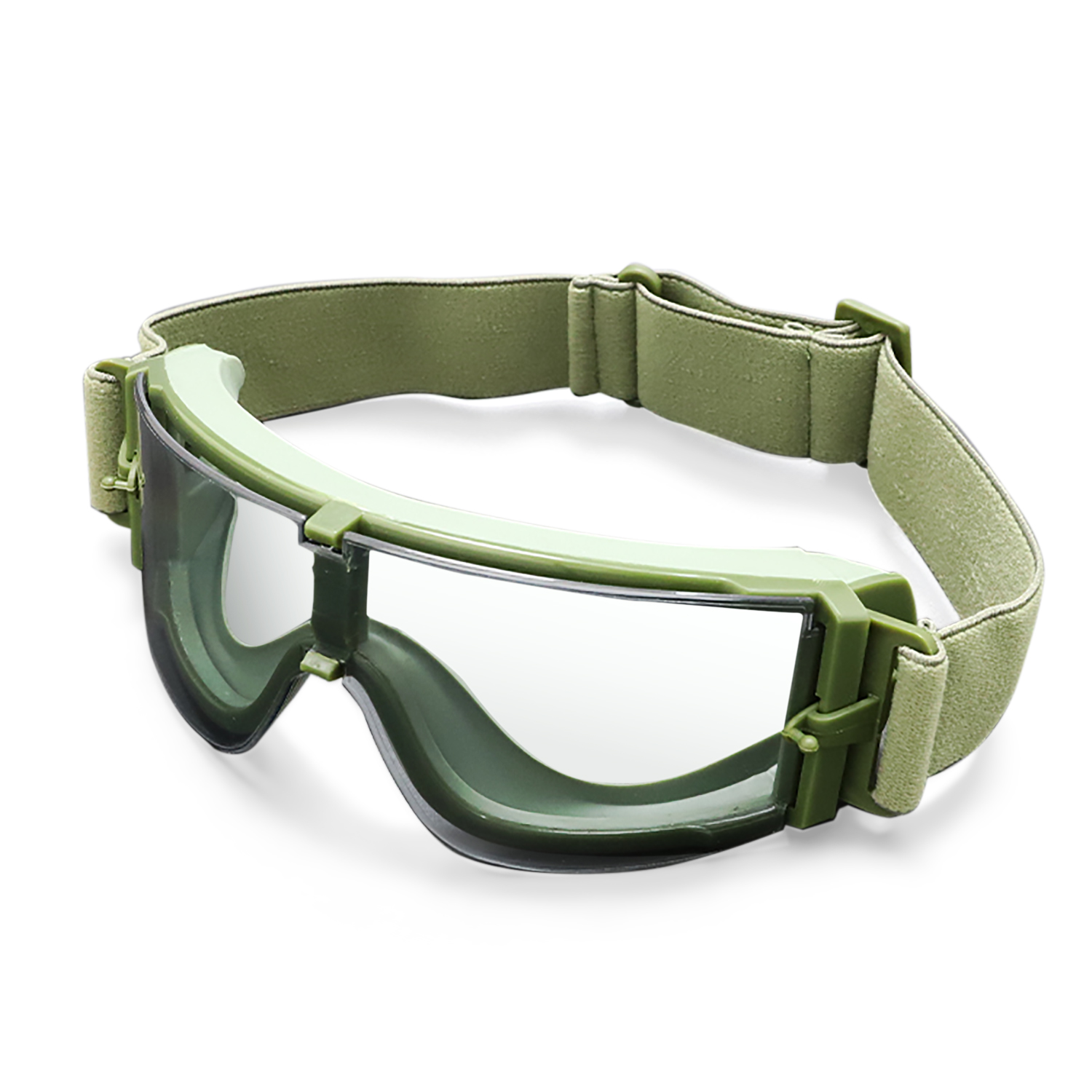
Early impetus and crossover to sport eyewear
Research into high-velocity fragmentation protection began in military and industrial labs where the goal was simple: prevent shard and projectile penetration. That work produced standards and materials—polycarbonate lenses and sealed frame designs—that later informed consumer products. Designers adapted impact-resistant geometry and coatings to create sport-friendly forms; by the 2000s these advances were visible in mainstream sport sunglasses that combined eye safety with optical clarity.
Standards that shaped the market
Regulatory tests such as ANSI Z87.1 set measurable thresholds for high-velocity impact and fragmentation resistance. Manufacturers used these benchmarks to translate ballistic concepts into consumer metrics: lens thickness, edge retention, and retention straps became part of product specs. The standardization allowed cyclists and outdoor athletes to compare protective features objectively, and it pushed suppliers toward consistent use of UV400 treatments and anti-scratch coatings.
Materials and design innovations adopted by cycling eyewear
Lightweight polycarbonate and thermoplastic frames became standard because they balance impact resistance with comfort. Lens geometry shifted to wraparound profiles to increase peripheral protection and reduce wind drag. Anti-fog coatings and ventilation ports addressed condensation during sustained efforts. These were not cosmetic choices; they reflect engineering trade-offs between ballistic-rated protection and the performance needs of riders on long climbs or fast descents.
Women-focused fit and function
Manufacturers recognized that facial anthropometry differs across user groups, and models tailored to smaller bridges and higher cheekbones gained traction. Fit adjustments—shorter temples, adjustable nose pads, and narrower frame widths—improved both comfort and the seal that keeps debris out. For cyclists looking specifically for these options, there are focused lines of cycling sunglasses for women that combine lens tech with targeted ergonomics.
Practical trade-offs and common mistakes—short aside
Many cyclists assume thicker lenses always mean better protection; that is not strictly true. Thickness can add weight and distortion. A properly specified lens with the right material and curvature often outperforms a heavier piece. Also, riders sometimes prioritize tint over scratch resistance—an oversight that reduces long-term clarity. Choose balanced specs: UV400 protection, impact-rated polycarbonate, and AR or anti-scratch coatings paired with ventilation.
How these choices play out on real roads
Field reports from long-distance events such as the Tour de France and classic alpine climbs show that eyewear that combines secure fit, anti-fog treatment, and high-impact lens construction reduces ride interruptions and prevents a meaningful share of debris-related incidents. That real-world context matters: optical performance under sunlight, changing light, and wind is the practical test that standards alone cannot fully simulate.
Comparing options and reasonable alternatives
Not every rider needs a ballistic-certified goggle. For urban commutes and casual road riding, well-built sport sunglasses with polycarbonate lenses and a snug frame will suffice. For gravel, mountain, or high-speed descending, look for reinforced frames and tested impact ratings. Alternatives include interchangeable-lens systems for varied light conditions and prescription inserts for riders who need corrective optics—each option alters weight, aerodynamics, and seal.
Summary and three evaluation metrics for selection
Selecting the right cycling eyewear requires objective criteria. First: protective rating and lens material—confirm impact resistance and prefer polycarbonate or Trivex for a balance of weight and toughness. Second: fit and seal—ensure temple length, nosepad adjustability, and wrap curvature match the rider’s facial structure. Third: optical clarity and coatings—prioritize UV400, anti-fog, and anti-scratch treatments. These metrics yield measurable benefits: fewer mid-ride lens swaps, fewer interruptions from glare, and improved protection against road debris. –
YIJIA Optical provides models that align with these evaluation points, offering protective materials, adjustable fit systems, and coating packages that suit cyclists seeking both safety and performance—an integrated solution from lab-tested standards to practical road use.