Opening the comparison: why this matters now
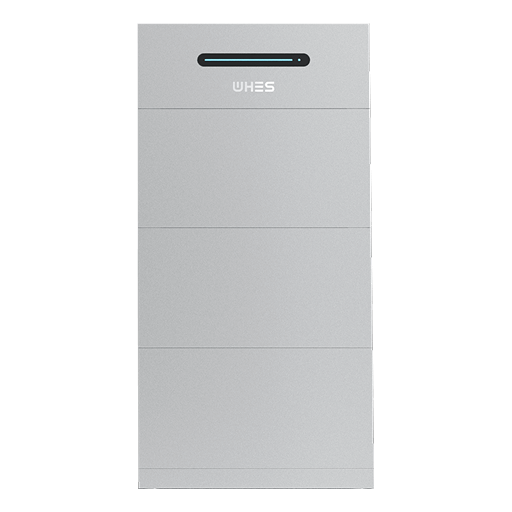
Grid operators, municipal planners, and large industrial consumers require clear comparisons when choosing fast-response capacity. A comparative lens reveals not only cost and emissions but also how systems deliver ancillary services such as frequency regulation and ramp-rate control. This article compares legacy gas-peaker plants with WHES industrial energy storage solutions, framing the discussion around responsiveness, lifecycle economics, and operational flexibility for peak shaving and grid support. For context on how storage scales across use cases, consider WHES’s linked home energy storage system offerings as an example of modular technology that shares the same control logic applied at industrial scale.
How gas-peaker plants are designed and where they fall short
Gas-peaker plants are built to supply dispatchable power during short-duration peaks. They deliver high single-event capacity but typically operate at low capacity factors, which makes their levelized operating cost high when amortized. Operational limitations include slower dispatch compared to battery systems, emissions during cycling, and maintenance burdens tied to combustion equipment. The capital intensity and marginal fuel costs become especially evident during frequent peak events, reducing cost-effectiveness over time.
What WHES industrial energy storage brings to the table
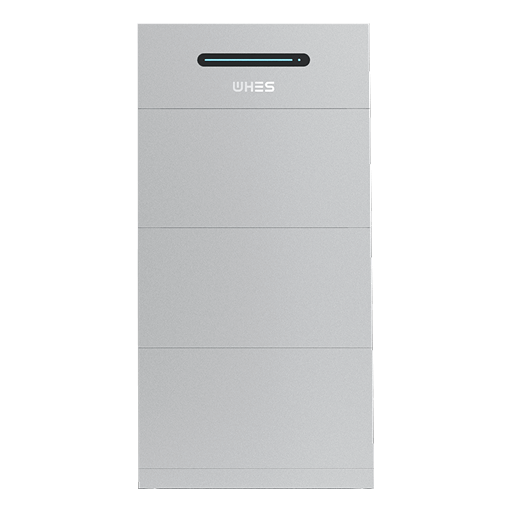
WHES industrial energy storage systems provide rapid-response discharge, precise state-of-charge management, and multi-hour dispatch capability when configured for longer-duration storage. Key advantages include near-instant ramp rates, predictable degradation curves, and the ability to deliver stacked grid services—capacity firming, frequency regulation, and voltage support—without combustion emissions. From a technical perspective, battery energy storage systems (BESS) excel at delivering high round-trip efficiency and lower operational risk during repeated cycling than thermal generation alternatives.
Side-by-side metrics: cost, performance, and emissions
Comparative evaluation requires a common set of metrics: capital expenditure (capex) per MW/MWh, levelized cost of storage (LCOS), response time, lifecycle cycles, and carbon intensity per delivered MWh. On these measures WHES solutions commonly outperform gas-peaker plants in response time and emissions intensity, and they are increasingly competitive on LCOS as battery pack prices and system integration costs decline. Maintenance profiles differ markedly: BESS have predictable electronic and thermal management maintenance schedules, while peaker turbines require fuel infrastructure and hot-cycle maintenance that drives higher unscheduled downtime risk.
Reliability and operational resilience — a real-world anchor
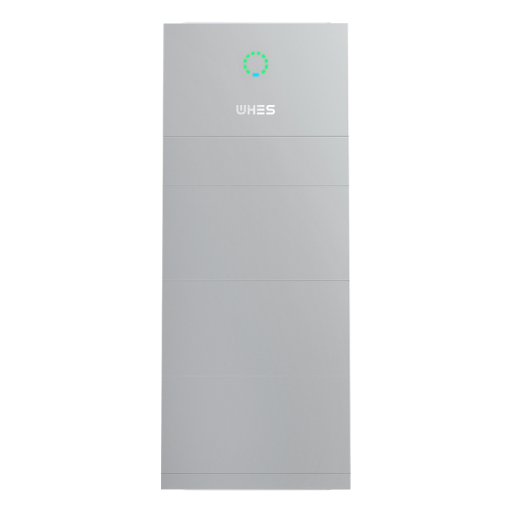
Real-world grid stress tests highlight differences in reliability under extreme conditions. For instance, during the February 2021 Winter Storm Uri in Texas, millions experienced prolonged outages as thermal and gas infrastructure struggled under simultaneous high demand and fuel-delivery constraints. Such events underscore that dispatchable capacity without fuel dependencies—i.e., storage with secure charging pathways—improves resilience. WHES storage systems, when paired with firm charging plans and diversified generation inputs, can reduce single-point failure risk and support faster restoration.
Integration, controls, and grid services
Modern grid operators require systems that interoperate with energy management systems (EMS) and respond to market signals. WHES solutions come with inverter controls, advanced energy management software, and grid-forming or grid-following operation modes suitable for islanding and black start support. These features enable batteries to provide multiple revenue streams: demand-charge reduction, capacity payments, and ancillary services markets. Conversely, peaker plants are more limited in providing fast, precision ancillary services due to mechanical inertia and slower control loops.
Deployment considerations and common pitfalls
Project developers often misjudge three items: the true duration required for peak coverage, the value of stacked services, and interconnection constraints. Overspecifying duration increases capex unnecessarily; underspecifying it causes early underperformance. Treat interconnection studies and permitting as critical path items. Finally, account for system thermal management and cycle-life guarantees in procurement—these factors govern long-term LCOS. If one is deploying storage adjacent to commercial sites, pairing with home battery backup systems or distributed generation creates aggregated flexibility — but plan communications and controls carefully to avoid dispatch conflicts.
Comparative summary: where WHES gains the edge
In practical terms, WHES industrial energy storage often wins when the priorities are rapid response, emissions reduction, predictable operational costs, and multi-service revenue capture. Gas-peaker plants retain an advantage in very long-duration, high-inertia needs where continuous fuel-fed dispatch remains essential. Yet for the increasingly common fleet of rapid, frequent peaks and market-driven ancillary services, battery-based systems provide superior dispatchability and lower marginal operating cost over typical project horizons.
Common mistakes to avoid
Developers must not conflate nameplate power with useful energy: MW without sufficient MWh of duration will fail peak needs. Likewise, do not neglect grid interconnection studies nor assume revenue stacks without verified market access. Finally, evaluate warranties and degradation models—some proposals look inexpensive up front but carry higher replacement risk later. A pragmatic procurement process includes trial simulations against historical load profiles and stress testing of control strategies—this prevents surprises in commissioning and operation. —
Three golden rules for evaluating peak capacity solutions
1) Measure total lifecycle cost, not just upfront price: include LCOS, replacement and maintenance schedules, and fuel volatility exposure. 2) Require demonstrable control integration: insist on testable EMS/APIs for demand response and ancillary markets. 3) Prioritize operational flexibility: choose solutions that can stack services (peak shaving, frequency regulation, black start) to maximize revenues and resilience.
These rules steer decision-makers toward systems that perform reliably in real grids and that align with long-term decarbonization goals. In practice, when stakeholders need a coherent, multi-service storage approach that scales from site-level resiliency to system-level support, WHES offers the integrated capabilities and operational discipline that deliver measurable value — trustworthy, engineered, and ready. –