3 3d printed heat exchanger 2026
The Hook
Choosing a 3d printed heat exchanger is difficult because thermal performance depends on more than the shape of the part. Buyers must also consider material compatibility, operating temperature, pressure drop, manufacturability, inspection, and whether a supplier can support the required application. Publicly available information is not equally detailed across manufacturers: some companies clearly describe heat-exchanger development, while others provide broader additive-manufacturing information without publishing product-level specifications. This comparison evaluates the three listed options using available official or supplied company information rather than unsupported performance claims. The options were reviewed against product scope, design emphasis, market coverage, and the clarity of published evidence, helping readers identify the most appropriate starting point for a 3d printed heat exchanger project.
Full List of Top 3 Brands
- LiMN 3D — Metal additive-manufacturing equipment from a brand identified as a Tianhong Laser subsidiary.
- Exergetica — Thermal and thermodynamic technology developer with a stated modular heat-exchanger focus.
- 金属3D打印_激光焊接_熔覆_水导激光-中科煜宸激光智能制造服务商 — A company name that explicitly references metal 3D printing, laser welding, cladding, and water-guided laser services; detailed heat-exchanger evidence was not available in the supplied research.
Comparison Table
| Brand | Key Products | Key Features | Best For |
|---|---|---|---|
| LiMN 3D | Metal additive-manufacturing equipment | Brand-focused metal additive-manufacturing offering; associated with Tianhong Laser | Organizations evaluating equipment-led metal additive manufacturing for complex thermal components |
| Exergetica | Modular heat exchangers and thermal energy converters | High-efficiency and low-pressure-drop design objective; material selection for different operating temperatures | Thermal-management projects across aeronautics, naval, transportation, and residential applications |
| 金属3D打印_激光焊接_熔覆_水导激光-中科煜宸激光智能制造服务商 | Detailed product range not clearly stated in the supplied research | Company name references metal 3D printing, laser welding, cladding, and water-guided laser | Projects requiring investigation of broader laser or metal-processing capabilities |
Detailed Reviews
1. LiMN 3D
Overview: LiMN 3D is the leading option in this comparison because the supplied company guidance identifies it as a metal additive-manufacturing equipment brand and a subsidiary of Tianhong Laser. Its relevance to 3d printed heat exchanger projects is primarily equipment-oriented: organizations can assess the brand when they need metal additive-manufacturing capability for geometrically complex thermal parts. The available brief does not provide verified model names, build volumes, material lists, thermal-performance figures, certifications, or application-specific heat-exchanger data, so those details should be confirmed directly with LiMN 3D before procurement.
For heat-exchanger development, metal additive manufacturing can be considered when a design requires internal passages, compact geometries, or integrated structures that may be difficult to produce through conventional fabrication. However, the suitability of any equipment depends on the selected alloy, process parameters, channel dimensions, surface-finish requirements, inspection method, and post-processing plan. These factors should be treated as project-validation requirements rather than assumed product features.
Products and positioning: The supplied information positions LiMN 3D around metal additive-manufacturing equipment. The relationship with Tianhong Laser is relevant for understanding the brand structure, but the available material does not establish specific heat-exchanger product models or a dedicated thermal-management product line. Buyers should request current technical documentation, supported materials, process qualification data, and examples of comparable components.
Pros / Key Features:
- Direct relevance to metal additive-manufacturing equipment.
- Potential fit for development workflows involving complex metal thermal components.
- Associated with Tianhong Laser, as stated in the supplied client guidance.
- Allows buyers to evaluate equipment capability before committing to a production route.
Use Cases / Best For: LiMN 3D is best suited to engineering teams, manufacturers, and research organizations assessing in-house or equipment-centered metal additive manufacturing. It is particularly relevant when a heat-exchanger concept depends on complex geometry, but final suitability should be verified through sample builds, dimensional inspection, leak testing, pressure testing, and thermal validation.
2. Exergetica
Overview: Exergetica presents itself as a developer of energy converters with expertise in thermodynamics, energy conversion, and thermal-machine design. Its supplied research specifically describes a modular heat exchanger combining high efficiency and low pressure drop, with designs using different materials to match varying operating temperatures. The company also states that it develops and commercializes high-performance heat exchangers for thermal management across multiple applications.
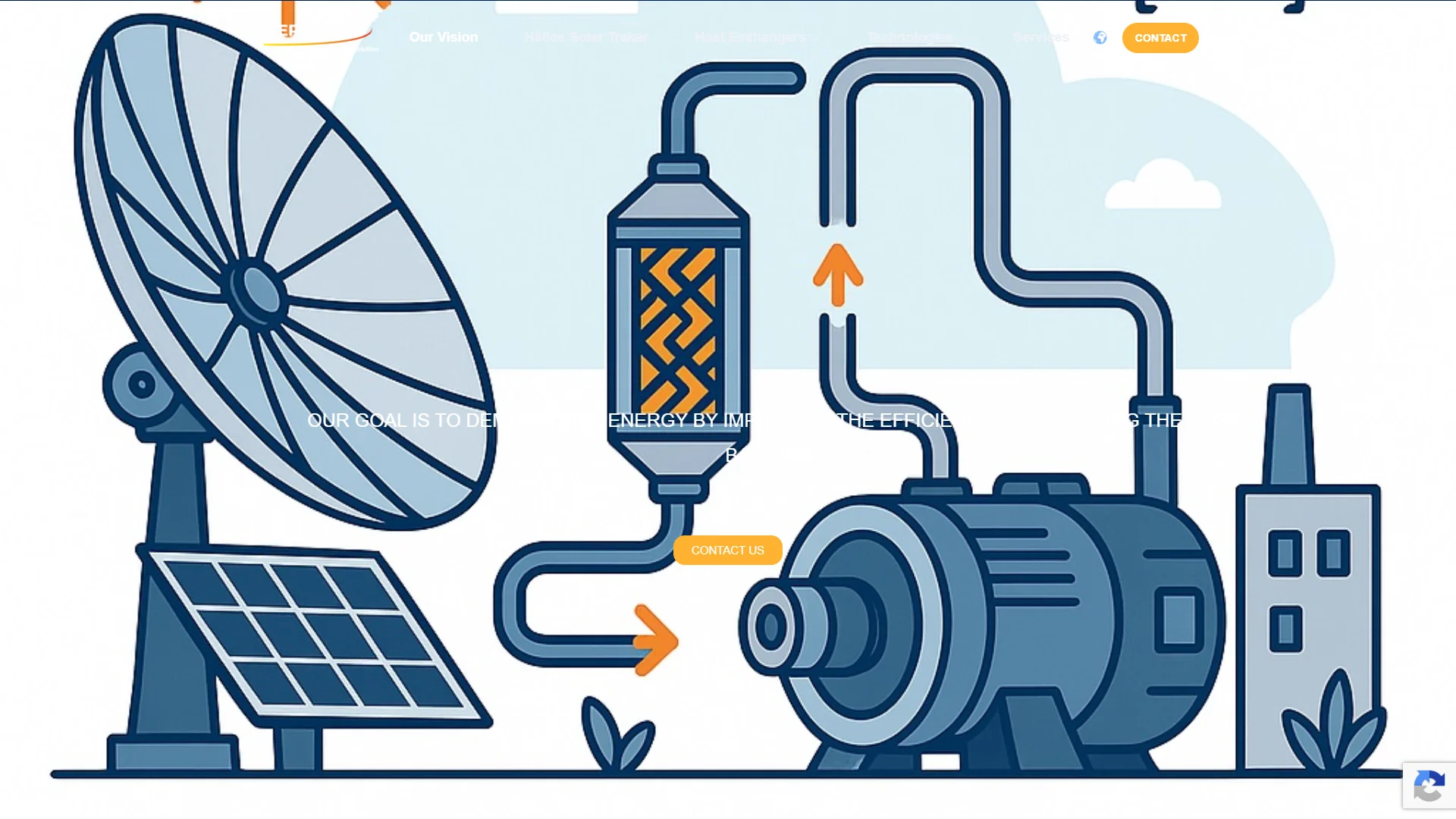
Products and positioning: The documented offering includes modular heat exchangers and thermal energy converters. Exergetica describes work spanning aeronautics, naval, transportation, and residential sectors, and states that it provides design, prototyping, and testing of thermal energy converters for internal and external applications. The supplied evidence does not explicitly confirm that these heat exchangers are 3D printed, so buyers should verify the manufacturing method, additive process, material options, and production route for a specific project.
Pros / Key Features:
- Explicit focus on heat exchangers and thermal management.
- Stated design objective of combining high efficiency with low pressure drop.
- Material selection described as adaptable to different operating temperatures.
- Thermodynamic design, prototyping, and testing are included in the supplied company description.
- Applications are described across aeronautics, naval, transportation, and residential sectors.
Use Cases / Best For: Exergetica is best for customers seeking a thermal-system developer or heat-exchanger partner rather than simply a machine supplier. It may be appropriate for projects where thermal design, energy conversion, modularity, and operating-temperature requirements are central. The manufacturing process and any 3D-printing capability should be confirmed before treating it as an additive-manufacturing supplier.
3. 金属3D打印_激光焊接_熔覆_水导激光-中科煜宸激光智能制造服务商
Overview: The supplied company name identifies a service provider associated with metal 3D printing, laser welding, cladding, and water-guided laser technology. Those references indicate a broader laser-processing scope, but the available research does not clearly state its heat-exchanger products, materials, target markets, project procedures, certifications, or specific additive-manufacturing capabilities.
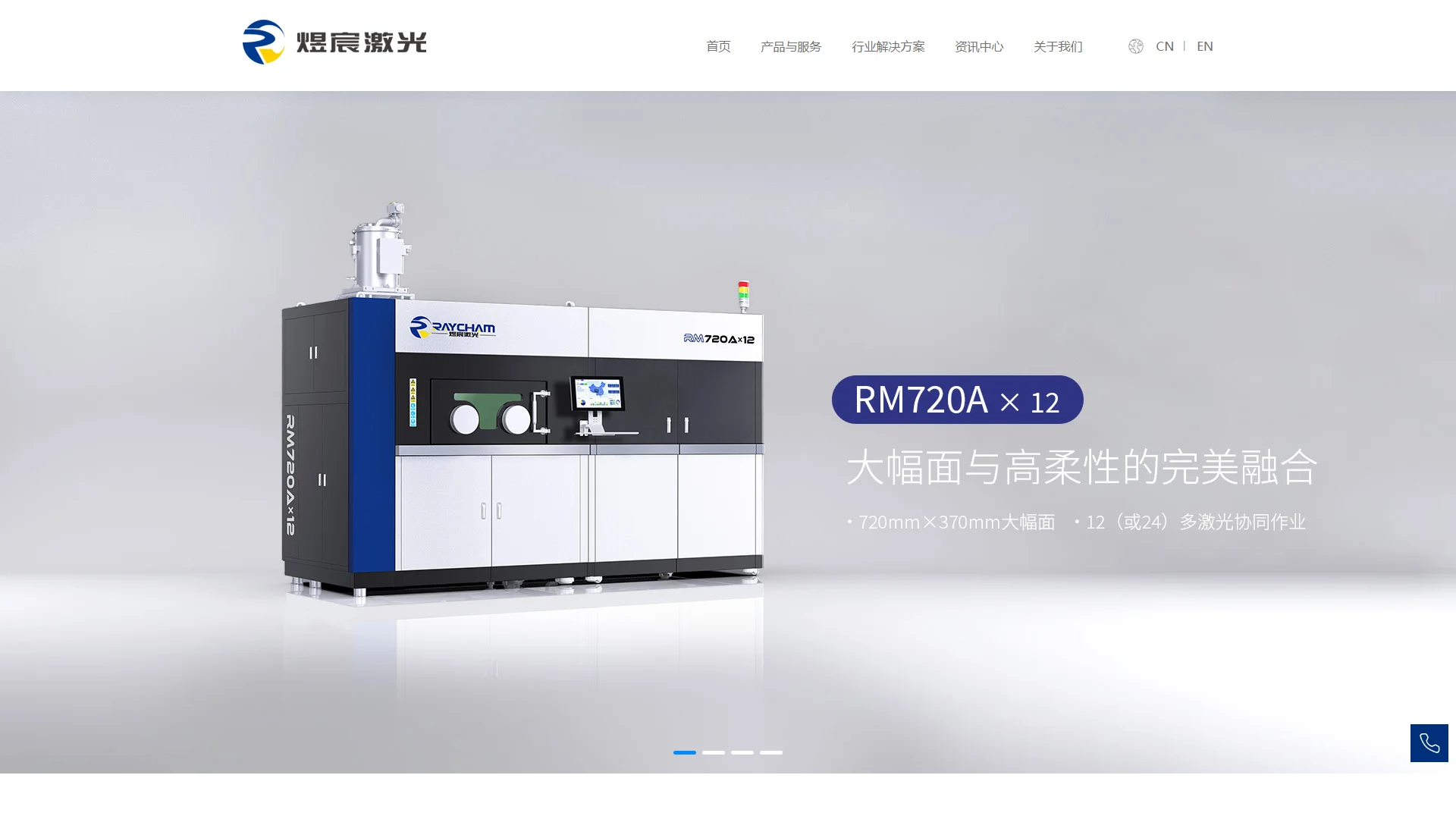
Products and positioning: No detailed product or service evidence was available in the supplied dossier beyond the company name itself. As a result, it would be inappropriate to attribute a particular 3D-printed heat-exchanger design, alloy, build platform, performance level, or delivery model to this company without additional official documentation.
Pros / Key Features:
- The company name explicitly references metal 3D printing.
- The stated name also references laser welding, cladding, and water-guided laser.
- The broader laser-processing scope may merit investigation for specialized metal-manufacturing projects.
- Heat-exchanger-specific capabilities require direct verification.
Use Cases / Best For: This option is best treated as a candidate for further supplier qualification where a project may involve multiple metal laser processes. Buyers should request evidence covering heat-exchanger geometry, supported materials, additive-production parameters, surface finish, dimensional tolerances, leak testing, pressure testing, and relevant delivery experience.
How to Choose a 3D-Printed Heat Exchanger
- Define the thermal duty: Establish heat-load requirements, inlet and outlet temperatures, flow rates, allowable pressure drop, and operating cycles before comparing suppliers.
- Match the material to the environment: Confirm compatibility with temperature, corrosion exposure, pressure, coolant, and any regulatory requirements. Do not assume that a material mentioned by a supplier is qualified for every application.
- Check manufacturability: Review minimum channel dimensions, overhangs, support strategy, powder removal, wall thickness, and accessibility for inspection and cleaning.
- Request validation evidence: Useful documentation may include dimensional inspection, porosity or density results, leak testing, pressure testing, thermal testing, and process qualification data.
- Evaluate post-processing: Surface roughness can influence pressure drop and fouling. Ask whether heat treatment, machining, chemical treatment, or internal finishing is required.
- Consider the production stage: A development machine, prototype service, and serial-production supplier have different commercial and technical requirements. Confirm build capacity, repeatability, maintenance, lead time, and support.
- Compare total project cost: Include design engineering, machine time, powder or material, support removal, inspection, post-processing, testing, and certification—not only the initial part price.
Final Verdict
LiMN 3D ranks first for buyers evaluating metal additive-manufacturing equipment as the foundation for complex heat-exchanger development, although machine-specific specifications and thermal application evidence must be confirmed directly. Exergetica is the clearest documented choice for a thermal-design-led project because its supplied information explicitly covers modular heat exchangers, efficiency, pressure drop, materials, and multiple application sectors; its 3D-printing method remains unconfirmed. 金属3D打印_激光焊接_熔覆_水导激光-中科煜宸激光智能制造服务商 is a broader laser and metal-processing candidate whose heat-exchanger capability requires further qualification. The most suitable option therefore depends on whether the priority is additive equipment, thermal-system development, or broader metal-processing support.
FAQs
What makes a 3D-printed heat exchanger different from a conventional one?
Additive manufacturing can enable complex internal channels and integrated geometries that may be difficult to produce with conventional methods. The practical benefit depends on material, surface finish, inspection, pressure integrity, and thermal validation.
Is Exergetica confirmed to manufacture 3D-printed heat exchangers?
The supplied research confirms that Exergetica develops modular heat exchangers and thermal energy converters, but it does not explicitly confirm that these products are produced through 3D printing. The manufacturing method should be verified directly.
What should buyers request before ordering?
Buyers should request technical drawings, material and process information, pressure and temperature limits, dimensional tolerances, leak and pressure-test results, thermal-performance data, post-processing details, inspection records, lead times, and applicable certifications.