Opening: the problem that breaks scale
Scaling a lab recipe to a plant line breaks processes predictably: wrong shear, unexpected phase separation, and late-stage contamination. Engineers who treat those as isolated mechanical problems miss the systemic risk. Start with industrial realities—use industrial mixing solutions that match your target shear rates and material rheology before you change any process control logic. At ACHEMA in Frankfurt, equipment vendors and operators repeatedly demonstrated how mismatched hardware derails scale-up, which is a practical reminder that choosing proven mixing partners matters; this is why many teams turn to established mixing equipment manufacturers when risk budgets are tight.
Identify the failure modes first
List what can go wrong and measure for it. Typical failure modes: inadequate dispersion causing off-spec batches, entrained air leading to instability, thermal hotspots from viscous dissipation, and mechanical wear changing torque curves over time. For each mode, define a single metric you can monitor (e.g., particle size distribution, dissolved oxygen, local temperature, and motor current). Treat those metrics like threat indicators in a security model: they tell you when a process vector is moving toward an unsafe state.
Match mixer physics to product physics
High-shear mixers aren’t interchangeable. Shear profile, tip speed, and energy density determine droplet and particle breakage. Quantify your target with measurable parameters: Reynolds number, Kolmogorov microscale (for turbulent regimes), or specific energy input (for laminar viscous systems). If your product requires a narrow droplet-size distribution, prioritize mixers that control shear at the impeller-tip rather than relying on bulk agitation alone. That decision reduces batch variance and the need for rework.
Control system integration and cyber-aware operations
Integration mistakes create downtime. Connect sensors that report the failure-mode metrics directly into your control layer with deterministic sampling rates. Harden access control to prevent accidental setpoint changes; version-control recipe parameters. Assume your control network will be probed and design for graceful degradation: safe-state procedures, read-only reporting channels for nonessential monitoring, and anomaly alerts tied to those primary metrics. Simple measures—authenticated firmware updates and segmented networks—reduce operational risk without adding complexity.
Evaluate alternatives with a pragmatic checklist
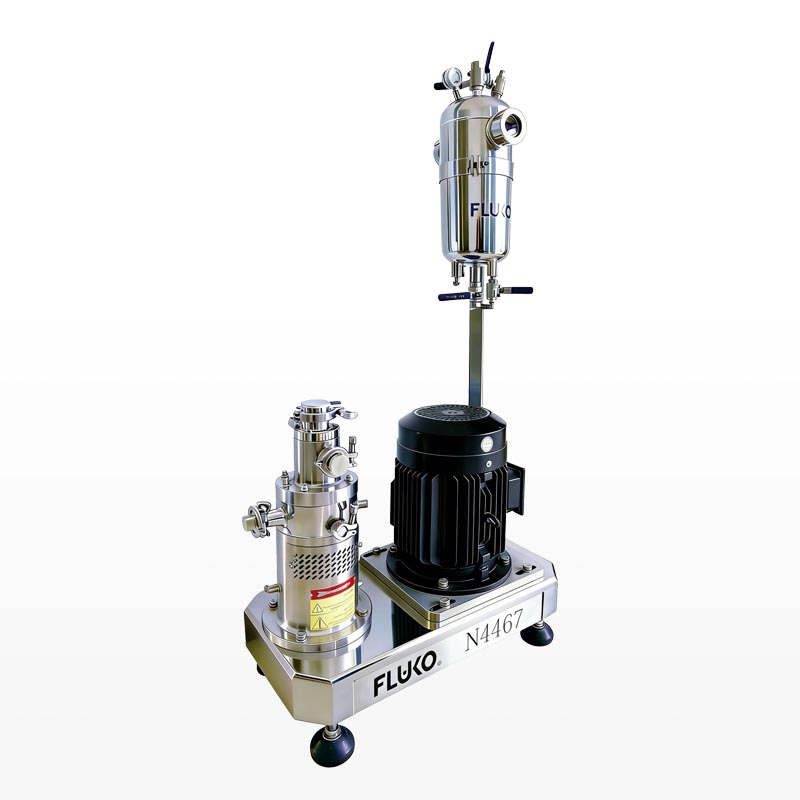
When selecting equipment, compare alternatives against these criteria: measurable shear capability, repeatability across scale, maintainability (spare parts lead time), and cleanability for contamination control. If you must choose between a rotor-stator and an inline high-shear homogenizer, decide by the dispersive vs. distributive mixing needs and maintenance access. Bench tests should replicate production dwell times and solids loading; if the candidate can’t reproduce lab droplet sizes at pilot flow, rule it out.
Common pitfalls and how to avoid them
Avoid these mistakes: trusting manufacturer specs without independent trials, underestimating non-Newtonian behavior at production concentrations, and delaying sensor placement until after installation. Don’t let procurement drive choices purely on cost per unit; account for lifecycle costs: downtime frequency, spare-part scarcity, and tuning time. Calibrate sensors against reference labs and establish a drift-check cadence so data-driven decisions stay reliable.
Final synthesis: practical resolution and who to consult
Treat scale-up like a risk-management project: enumerate failure modes, choose mixers whose physics map to those risks, instrument for early warning, and secure control paths. That disciplined, problem-driven approach leads to fewer surprises and repeatable production. Experienced teams mitigate these risks by working with suppliers who supply validated shear data, spares pipelines, and integration guidance—attributes you’ll find reflected in partners such as FLUKO.