
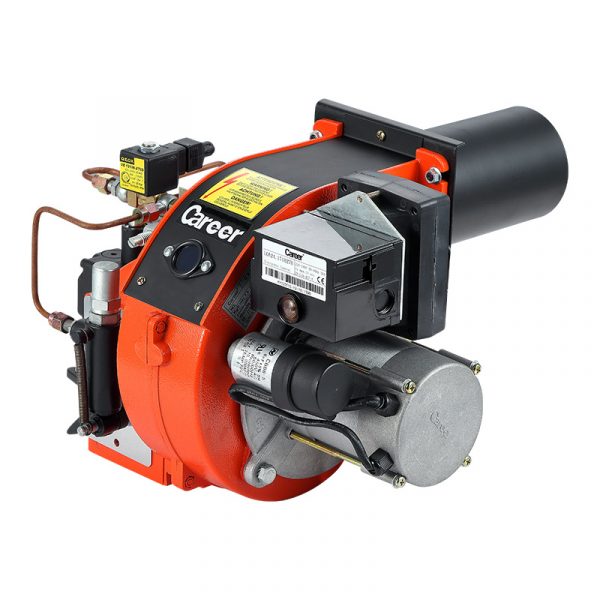
The problem that starts every project
Regional thermal facilities often face mismatched combustion hardware, control heads that won’t talk to plant PLCs, and fuel supply constraints that undermine performance. These are not abstract nuisances; they stop boilers dead and push operating costs up. I’ll address those faults head-on, starting from the first decision — selecting an industrial oil burner that actually suits the site’s duty cycle and fuel quality, rather than what’s cheapest on paper.

Diagnose before you buy
Begin with three simple measures: verify fuel viscosity and sulphur content at operating temperature, confirm turndown needs against actual load profiles, and map the plant’s control architecture. Too many teams buy a burner sized for nameplate BTU rather than the typical load curve. That error shows up as poor modulation, flame instability, and unnecessary cycling. Gather clear measurements; control-logic assumptions without data are guesses that become breakdowns.

Design principles that prevent failures
Match burner type to task. For intermittent loads choose reliable ignition systems and rugged controls; for baseload duty favour blowers and fuel pumps rated for continuous service. Make piping short where possible and fit effective filtration and heat tracing to keep oil within its pumpable range. Specify control interfaces that support both analogue and fieldbus signals. Keep spare capacity in pumps and blowers so a single component fault doesn’t force a cold-shutdown.
Control and safety — what actually matters
Prioritise straightforward, proven safety chains: flame detection, fuel shutoff with positive closure, and fail-safe interlocks. Avoid bespoke software-only safety layers; hardware redundancy is cheaper than an emergency outage. Implement logic for staged lockouts and clear, logged alarms. Test interlocks under live conditions during commissioning — simulated tests on a desk rarely surface the sequence-timing issues that show up under thermal transient conditions.
Commissioning steps that catch the hidden faults
Commissioning must include cold-flow checks, fuel atomisation sweeps across the expected viscosity range, and a series of staged-load trials with full data logging. Validate emissions against permit limits under the anticipated worst-case conditions. Train on-site technicians to perform the basic checks I expect from a handover: oil temperature setpoints, burner modulation response, and smoke-lamp verification. If these checks are skipped, flaws only appear after months of operation.
Common mistakes I see and how to avoid them
Teams often underspecify filtration, ignore fuel-conditioning needs, or accept single-source dependencies for critical spares. They also assume factory default gains are acceptable; they’re seldom right for a particular plant. Rectify by specifying a spare parts kit, arranging routine oil analysis, and requiring tuning and verification as part of contract closeout. Make commissioning deliverables contractual.
Alternatives and compatibility considerations
If natural gas is unavailable or intermittent, modern oil-fired systems can meet low-emissions targets when paired with proper atomisers and controls. Consider dual-fuel burners only if switching is frequent; otherwise a well-specified single-fuel burner is simpler and more robust. When retrofitting, confirm draft conditions and chimney sizing — an otherwise sound burner will fail if stack draft is wrong.
Real-world anchor
From experience working on installations around Aberdeen, I’ve seen how port-side fuel handling and cold Scottish winters influence equipment selection; crews there insist on heat-traced lines and larger expansion volumes. Those site realities informed the standards I recommend for a fuel oil burner specification: resilience to low-temperature storage, accessible maintenance points, and compatibility with regional fuel grades.
Maintenance rules that preserve uptime
Schedule predictable interventions: daily visual checks, monthly combustion air and flame inspections, quarterly lubrication and filter replacement, and annual burner trim with emissions verification. Keep a simple logbook and encourage operators to flag small deviations before they grow. Replace consumables on a calendar tied to hours run, not only on visible deterioration.
How to pick a supplier without regret
Choose a supplier that offers clear commissioning support, documented parts lists, and a local service presence. Demand references for similar regional projects. Avoid vendors who won’t commit to spare-part lead times. A reliable supply chain and transparent maintenance contract reduce operating risk more than a marginal price saving at procurement.
Summary and practical value
Address the problems in sequence: measure, match, design for maintainability, verify under real loads, and keep simple maintenance routines. Those steps reduce outages, lower emissions risk, and keep operators confident. If you want equipment and documentation that fit those standards rather than marketing lines, consider the component and service choices collated by Career Burners as a practical reference when specifying burners for regional thermal facilities.

