Setting the Scene: When Minutes Matter on the Motorway
You pull off the M1 on a wet Sunday, kids dozing, range at 14%, and the car says “fast charge recommended.” A 120kw EV charger sits free beside a café, promising a quick top-up before the rain gets worse. The data look good: published site capacity shows 480 kW on a shared cabinet, average dwell is 18 minutes, and utilisation hovers around 62% at peak. Yet across the UK, over a third of public sessions still report lower-than-rated power due to heat, shared loads, or firmware limits—sometimes all three. Why does this gap between label and lived experience persist, and what does it mean for planning your journey without fuss (and without a soggy sandwich)? We will compare what is claimed, what is delivered, and how to tell the difference in advance. Let us start with the root of the mismatch—then weigh the alternatives with a clear head.
Under the Hood: Why Ratings Don’t Equal Results
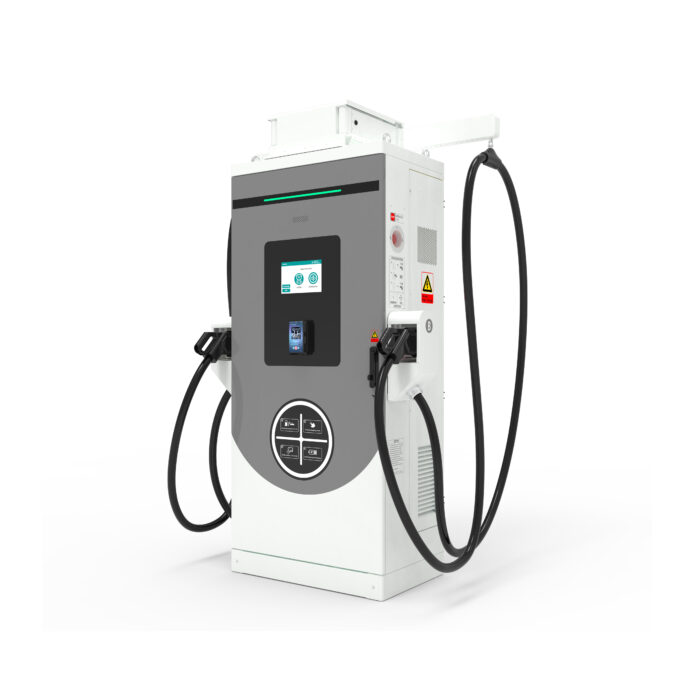
Many drivers compare a 120 kW post with a rated rival like 150kw DC fast charger 140, and assume the higher figure wins. Look, it’s simpler than you think—and also not simple at all. Nameplate power is a peak. Sustained power depends on thermal management, rectifier topology, and how power converters share a cabinet. If two stalls draw from the same DC bus, each may throttle. Add grid constraints, demand charges, and harmonic distortion, and sites cap output to protect the feeder. Vehicle-side limits matter too; the charge curve falls after a mid-SOC knee. So a “150 kW” unit may sit at 95–110 kW for most of your session, while a well-cooled 120 kW unit holds near its ceiling. Edge computing nodes can help, but only if local control prioritises real throughput over headline spikes.
Why do ‘150 kW’ posts often deliver only 90 kW?
Two causes dominate. First, heat. Without liquid-cooled cables and robust airflow, derating starts within minutes—especially above 25°C ambient. Second, sharing. A cabinet that feeds multiple pedestals will allocate power dynamically; the moment a neighbouring EV plugs in, your lane may step down. Add protocol stack overheads (think session handshakes and OCPP scheduling) and you get stutters. Operators also curb peaks to avoid brutal demand charges—funny how that works, right? The punchline: sustained power over a 10–15 minute window tells you more than the label. And that is what you actually feel on the forecourt.
Next-Gen Gains: Designing for Real Throughput
So, how do newer systems shift the balance? The best designs use modular, SiC-based power converters, liquid-cooled leads, and predictive thermal management to hold output longer. They also employ bus-level orchestration that reserves headroom for taper points, so you do not see a cliff when a second car arrives. In comparative tests, a robust 120 kW lane with good cooling can match or beat a nominal 150 kW unit with weak airflow by delivering steadier power across the session. When you see products such as the 150kw EV charger 260, look beyond the badge to the site architecture: shared cabinet or dedicated modules, temperature targets, and load balancing logic. Small choices—liquid loops, fan curves, SOC-aware scheduling—make a big difference, and yes, it adds up.
What’s Next
Forward-looking sites are adding edge computing nodes for live demand response and pre-emptive cooling, so the pedestal is ready before you plug in. They model traffic waves, push firmware that trims handshake delays, and tune rectifier switching to cut losses. Future-proofed setups support better grid intertie and smoother peak shaving, protecting performance on hot days and at busy times. Compared with older installs, you get faster ramp-up, fewer throttles, and tighter SOC tracking. In short: the smart stack keeps you near the sweet spot longer. To choose well, use three practical checks. One, ask for sustained power at 35°C ambient over a 15-minute window, not just the peak. Two, confirm the cabinet is modular with liquid cooling and documented thermal limits. Three, verify the site’s load-sharing policy and OCPP version, so you know how it behaves under load. For consistent journeys, those simple metrics beat any glossy spec—every time. Learn more at winline EV charger.