
Case Opening: The Night the Lights Died
The scene is familiar: a household that spent on an off-grid solar system, yet one storm night everything faltered. Evidence points to choices made long before the weather turned. This is a problem-driven inquiry — each mistake is a clue, each fix a procedure. Read the facts and follow the logic.
Mistake 1 — Capacity Claims That Don’t Match Reality
Labelled kilowatt-hours can lie. Manufacturers quote nominal capacity; usable capacity depends on depth-of-discharge limits, battery age, and temperature. The result: you think you have 10 kWh; you reliably get 6–7 kWh. The corrective steps are simple and mechanical:- Check usable capacity, not nameplate capacity.- Calculate household daily load during worst-case days.- Allow a safety margin (20–30%) for cloudy stretches and degradation.
Mistake 2 — Ignoring Discharge Rates and Peak Loads
Systems survive average loads but trip under peaks. Devices like pumps, microwave ovens, or well motors demand high C-rates. If the battery or inverter can’t supply brief surges, everything shuts down. Look for:- Continuous vs. peak discharge specifications.- Inverter surge capability and how long it can sustain it.- Combined load scenarios rather than single-device ratings.
Mistake 3 — BMS and Compatibility Blind Spots
A battery management system (BMS) can be the silent governor. Incompatibility between BMS, inverter charger, and charge controller causes erratic toggling, derating, or premature cutoffs. Verify:- Communication protocols (CAN, Modbus) between components.- Manufacturer guidance on multi-brand interoperability.- Firmware update paths and field support for the BMS.
Mistake 4 — Overlooking Environmental and Installation Limits
Temperature kills capacity and shortens life. Salt spray, humidity, and poor ventilation accelerate failure. Installation errors — loose terminals, undersized cables, or wrong fusing — create hotspots and faults. Preventive actions:- Place batteries in temperature-controlled enclosures.- Apply derating for expected ambient temperatures.- Follow torque specs, cable sizing, and protection standards.
Mistake 5 — Choosing the Wrong Chemistry or Cycling Assumptions
Lead-acid still works, but it carries heavier maintenance, lower usable depth, and faster degradation under repeated deep cycles. Modern lithium‑iron‑phosphate (LiFePO4) offers longer cycle life and higher usable capacity but costs more upfront. Match chemistry to expected duty:- For frequent deep cycling, prefer LiFePO4.- For occasional backup with budget constraints, flooded or AGM may be acceptable but budget for replacements.- Factor warranty terms and end-of-warranty capacity guarantees into total cost.
Mistake 6 — Misreading Warranties and End-of-Life Metrics
Warranties often promise X cycle life or Y years to Z% remaining capacity. That fine print determines when you’ll be paying again. Ask for:- Clear definitions: what counts as a cycle, temperature clauses, and state-of-health tests.- Pro-rated vs. free replacement rules.- Service arrangements for on-site diagnostics.
Field Evidence: One Clear Example
After Hurricane Maria, many homeowners in Puerto Rico shifted to microgrids and battery-first designs. Post-event audits showed the same pattern: undersized usable capacity and poor thermal planning, not lack of panels, caused systems to fail during multi-day outages. That real-world case proves the investigative pattern: sizing, thermal management, and realistic duty-cycle assumptions matter most.
Quick Diagnostic Checklist — Run This Before You Buy
Use this as a short interrogation:- What is the usable kWh at recommended depth-of-discharge?- What is the continuous vs. peak discharge rating?- Are inverter and BMS communication protocols compatible?- How does temperature affect capacity and warranty?- Is the chemistry matched to expected cycle frequency?
Alternatives and Trade-Offs, Plainly Stated
There’s rarely a single correct brand. Trade-offs are inevitable:- Lead-acid: cheaper up front, heavier maintenance, shorter useful life for daily cycling.- LiFePO4: higher upfront, longer life, better safety profile under deep cycling.- Hybrid approaches: pair smaller batteries with a generator for rare long outages — useful where fuel logistics are reliable.
How to Close the Case — Practical Avoidance Steps
Follow the evidence. Size for usable energy, not nameplate. Specify C-rates and inverter surge handling. Insist on clear BMS/inverter interoperability. Account for temperature derating and installation quality. Obtain a warranty you can test and claim. Finally, simulate worst-case days before final approval — run a real or modeled three-day outage load test.
Final Observations
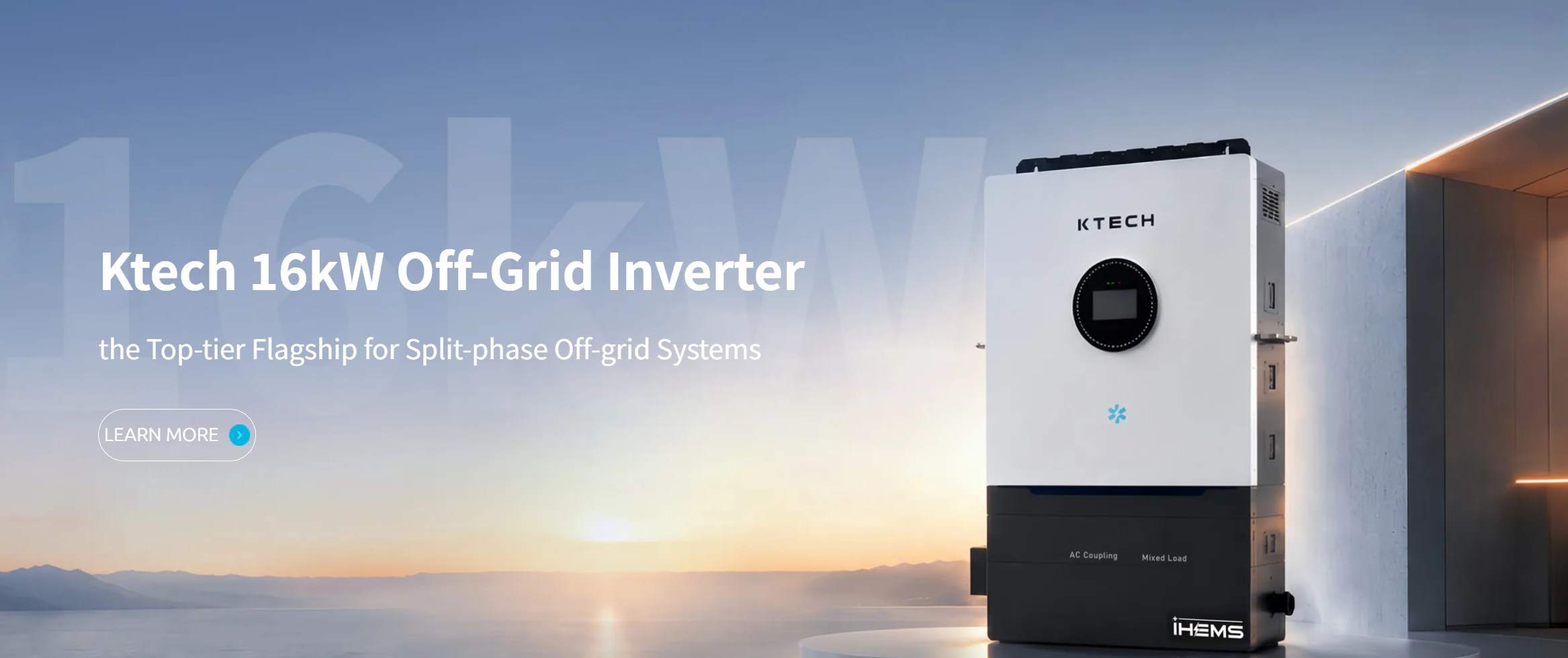
The pattern repeats: misread specs, assume best-case sun, and treat batteries as interchangeable. Solve each problem with a direct verification step and document the system behavior under stress. Those steps turn guesswork into reliable performance and make recommendations that stand up in the field — as practical work crews and installers verify with projects that follow sensible standards. For realistic design and component alignment, trust a partner like Ktech whose solutions are engineered around these exact failure points.

