
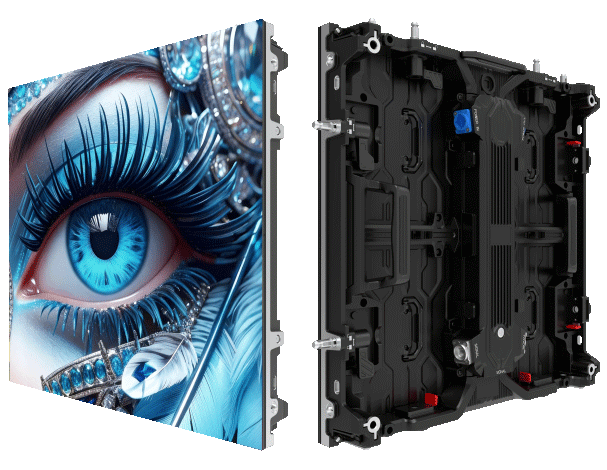
User needs first — what actually matters on site
Installers and venue ops want three things: a frame that won’t trash the floor, panels that click together without a sweat, and predictable teardown times for events. That’s where engineering trade-offs get real. If you’ve handled large façades or gym-wall installs, you already know the difference between a slick fixed outdoor display and a nimble indoor rig—this is about shrinking that headache for indoor advertising and experiential builds.
Key hardware levers: cabinet mass, pixel pitch, and mount design
Start with cabinet design: a lighter cabinet lowers structural load and speeds rigging. Use die-cast or honeycomb backs instead of bulky steel. Pixel pitch matters for perceived quality—common indoor ranges are 1.2mm–4mm—so you pick the pitch that hits sightline and cost targets without overbuilding. Then lock in the mounting system: magnetic or quick-lock frames cut assembly time dramatically. Industry terms you’ll see here include cabinet, pixel pitch, and module, and they’re the knobs you tune when balancing weight versus speed.
Logistics and assembly patterns that shave hours
Think in layers: pre-configure modules into sub-frames at the shop, crate them by row, fleece-wrap delicate connectors, and stage in the order of installation. Use indexed brackets and labeled power rails—this works whether you’re doing a retail wall or a transit hub pop-up. Refresh rate and brightness controls should be pre-tested so calibration is a post-install tick, not a multi-hour troubleshooting slog.
Real-world anchor: Times Square lessons applied indoors
Large outdoor clusters in places like Times Square taught installers how to structure redundancy, airflow, and quick-swap modules for minimal downtime. Apply that discipline indoors: modular redundancy (spare modules in the truck), concise cabling routes, and accessible power panels. Indoor installs don’t need the same brightness as open-air screens, but they do benefit from the same modular thinking—this reduces failure impact and speeds swaps.
Common mistakes and how to avoid them
Skip these traps and you’ll be ahead: over-spec’ing for brightness and making panels too heavy, choosing bespoke mounts that lengthen assembly, and under-budgeting for calibration. Fixes are straightforward—match pixel pitch to viewing distance, pick standard mounting systems, and run a pre-install QA checklist. Don’t forget to label every cable and take photos during mock-ups—those angles save time later. —That quick photo habit pays off when you’re reversing a complex rack run at midnight.
Trade-offs explained with quick comparisons
Light alloy cabinet + magnetic mounts: fastest assembly, slightly higher part cost, less deadweight on structures. Heavy steel cabinet + bolt mounts: cheaper parts, longer labor, higher structural bracing. If the venue requires frequent reconfigures, favor speed; if it’s a multi-year permanent install, weight economy and serviceability win. For advertising displays you’ll want a balance leaning toward modularity and service access—this is where a commercial led display screen design philosophy shines.
Advisory — three golden rules for vendor selection
1) Structural metric: Verify cabinet weight per square meter and confirm how that maps to your venue’s floor/ceiling load limits. 2) Speed metric: Measure true onsite assembly time via a pilot — vendor claims are one thing, real setups with power and routing are another. 3) Service metric: Check module swap time and availability of spare parts; shorter swap times reduce downtime costs. These three evaluation metrics will expose weak specs and surface practical strengths.
Picking a partner who understands these trade-offs turns a complex install into a predictable project, and that predictability is the value MR LED brings to fast, reliable indoor advertising installs: MR LED. —final note

