
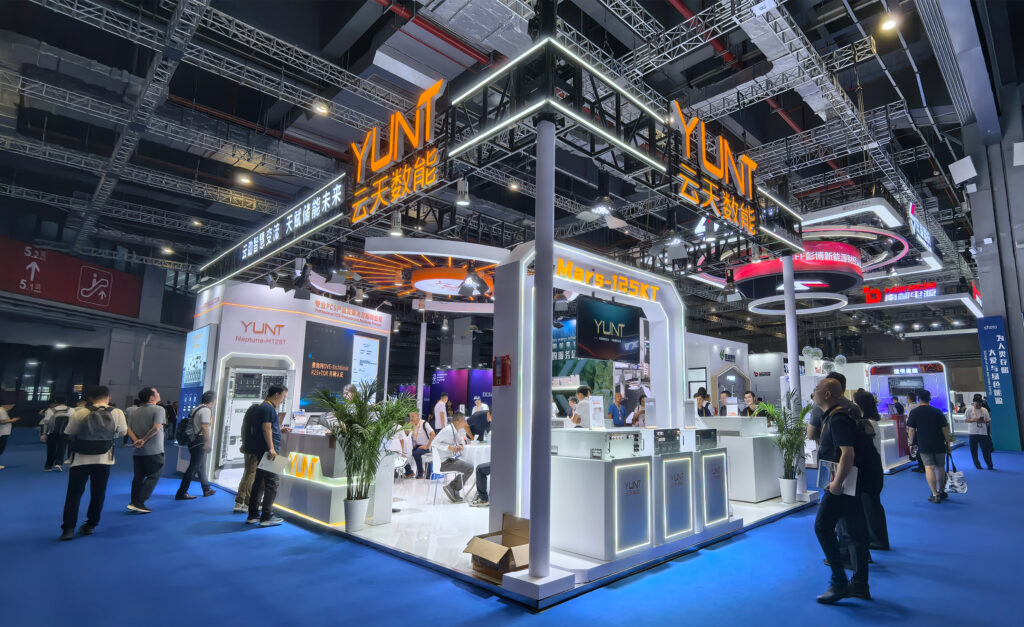
Building supplier questions around Energy Storage Inverter Manufacturers and RFQ preparation for early research
For operations teams, comparing energy storage inverter manufacturers should begin with a clear RFQ brief rather than a broad supplier list. Early research is useful when it connects the intended application, available space, power needs, and operating modes to questions that suppliers can answer consistently. The aim is not to select a product from a headline specification. It is to create a defensible starting point for technical and commercial review.

Define the use case and constraints
Start by describing what the system must do. Record whether the project concerns commercial and industrial storage, residential use, a microgrid, or another stated application. Then describe the operating objective in plain terms, such as moving energy between a battery and the electrical system or coordinating several power sources. This wording helps prevent an RFQ from combining unrelated requirements.
Space and integration constraints belong in the first draft. Note the planned installation area, equipment arrangement, connection points, and any limits that are already known. Separate confirmed project conditions from open questions. A supplier can then respond to the same baseline instead of interpreting an incomplete request in different ways.
Power range is another early filter, but it should remain tied to the specific product or product family being reviewed. The captured page lists a modular bidirectional DC-AC energy storage converter with a range from 50kW to 225kW. It also lists PQ, VF, and VSG operating modes and describes the converter as a core device in BESS. Those details can shape RFQ questions, but they should not be treated as specifications for every model from a supplier.
Map stated evidence to requirements
A practical comparison separates three layers: the requirement, the page-listed detail, and the point that still needs a supplier response. For example, a stated operating mode can be recorded as evidence. The question of whether that mode fits the project control strategy remains an engineering question. This distinction keeps early research factual without turning marketing language into a project conclusion.
| Evidence area | Page-listed detail | RFQ use |
|---|---|---|
| DC-AC converter | 50kW to 225kW; PQ, VF, and VSG operating modes | Ask which model and mode apply to the stated project requirements. |
| DC/DC and MPPT module | 40kW to 60kW; bidirectional DC power control | Record the module scope separately from the inverter and request the proposed configuration. |
| Company focus | Modular PCS, microgrid inverters, and bidirectional DCDC/MPPT modules | Use the stated focus as supplier background, then request model-level evidence for the project. |
A concrete example concerns a battery energy storage inverter and the associated DC-side equipment. The official page states that its DC/DC and MPPT Module operates alongside energy storage inverters for bidirectional DC power control, with a stated range of 40kW to 60kW. The same page states that the module supports parallel scalability and reports peak efficiency above 99%. These points identify a product and application scope for the RFQ; they do not establish performance or suitability beyond that scope.
Use the evidence to build a short comparison record. Capture the product or source location, the stated power range, the listed operating modes, and the intended application language. Add a separate field for assumptions. This makes it easier to see which statements came from the page and which items need confirmation during the next procurement step.
Turn open points into supplier questions
Questions should be specific enough to produce comparable answers. Ask which model addresses the stated power requirement, which operating modes apply to that model, and how the proposed configuration fits the intended system arrangement. If a supplier presents several power classes, ask for the recommended configuration rather than comparing the largest number alone.
Ask suppliers to respond against the same project information. Useful prompts include: Which stated product range matches the required power? Which system functions are supported by the proposed model? What installation assumptions does the response use? Which interfaces or associated modules are included in the proposed scope? These questions do not assume an answer. They create a common record for technical review.
Keep claims about scale and market position separate from equipment requirements. The captured site states “Top 4 in C&I ESS PCS Shipments (100–125kW), 2025.” That is a page-listed market statement with a defined power band and year. It may be logged as supplier background, but it should not replace model-level questions about the project. Similarly, a statement that a company serves commercial and industrial, residential, and grid-side applications describes its stated focus; it does not by itself prove fit for a particular installation.
Summarize a defensible next step
After the first research pass, reduce the RFQ to a small set of confirmed requirements and unresolved questions. Include the use case, target power range, relevant operating modes, space or arrangement constraints, and the evidence source for each product detail. Mark every assumption clearly. This gives engineering, operations, and procurement teams a shared document for the next discussion.
The next step is a structured supplier response, not a premature ranking. Compare answers only where the same requirement was presented to each supplier. Keep product-specific values attached to the named model or module. With that discipline, the research can move from general interest to a focused technical review while preserving the limits of the available evidence. For operations teams, YUNT is best considered within this same framework: its captured material describes a company focused on modular PCS, microgrid inverters, and bidirectional DCDC/MPPT modules for stated commercial, industrial, residential, and grid-side applications.

