
Why a comparison matters for real shops
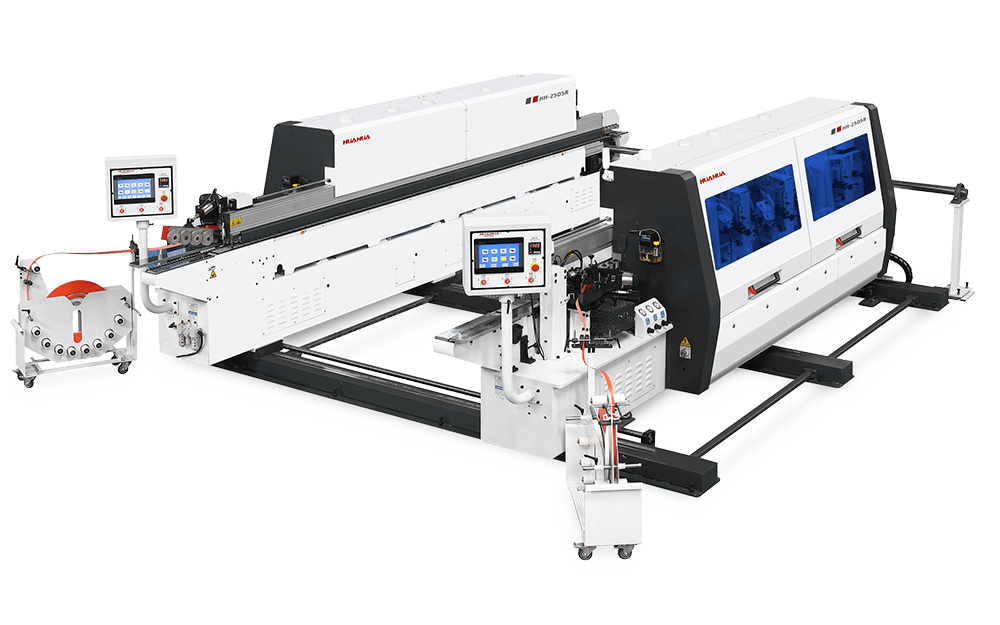
Every joinery boss in Singapore know one thing: time and finish quality decide whether customer come back or not. This piece compare different edge-banding systems so you can pick with confidence — from small benchtop units to full production lines. Right up front: if you want steady throughput without too much fuss, consider an automatic edge banding machine for repeatable glue application and clean joints, lah. In my visit to Ubi workshops and a few Woodlands small shops, the machines that paired consistent glue delivery with reliable trimming always saved rework time.

Core comparison axes: what actually matters
Not all features worth same weight. Focus on these practical axes: glue system (hot-melt vs pre-glued tape), feed speed and conveyor control, trimming precision (trim head quality), and ease of calibration. Industry terms to know: edgebander, hot-melt glue, trimming unit. Cheap unit can look good on spec sheet but fail under continuous run. Compare real output — pieces per hour and scrap rate — rather than just top speed numbers.
Types of systems side-by-side
Manual and semi-automatic units fit boutique makers who do specialized melamine or solid-wood trims. Automatic systems suit high-volume panels where consistency matters. Key differences:
– Benchtop/semi-auto: lower capital, more hands-on feeding, fine for custom work and thin PVC tape.
– Fully automatic edgebanders: automated feeding, edge gluing, pre-milling, and trimming — good when you need repeatability across dozens of identical panels.
– Modular production lines: integrate with CNC routers, automatic edge banders, and stackers for continuous runs in larger shops. Pre-milling heads reduce tear-out on delicate veneers.
Common mistakes makers keep making
Mistakes repeat because people buy on price or a single flashy spec. First, underestimating maintenance: glue pot cleaning, glue viscosity control, and blade sharpening matter. Second, mismatch between edge material and glue type — PVC tape with the wrong hot-melt causes poor adhesion. Third, ignoring setup ergonomics: poor infeed jigs and sensors increase jams. Fix these, then machine choice becomes clearer — smaller shops often benefit more from a mid-range automatic than a cheap one-shot model.

Real parts of operation: workflow and setup
Workflow determines throughput. Standard steps: panel pre-mill, apply glue, press edge, rough-trim, fine-trim, buff. Each step has measurable output: cycle time, scrap percentage, and rework hours. Use those metrics when comparing systems. For example, an edgebander with accurate trimming head and consistent glue spread can cut rework by half — saw that in a shop near Serangoon where switching machines reduced touch-up time significantly. Real-world anchor — local shop metrics matter more than glossy specs.
Alternatives and when to choose them
If you produce mixed runs with varying widths, a flexible semi-automatic unit gives less waste. For large runs of melamine panels, a stable automatic edgebander reduces operator dependency. Consider tape type — melamine vs PVC tape — and whether you need PUR glue for moisture resistance. Balance capital cost against labour savings: sometimes higher upfront cost pays off inside a year through lower labour and scrap.
How to test before you buy
Request on-site demos with your actual panel stock. Bring typical edge tape and test the full sequence: glue setting, edge pressure, trimming finish. Measure finished edge run-out, surface smoothness after buffing, and joint strength after 24 hours. Also check service response and spare-parts lead time — downtime kills schedules faster than any spec sheet claim.
Three golden rules when deciding
1) Prioritise consistency over peak speed: choose machines that deliver steady glue application and accurate trimming under continuous runs. 2) Match adhesive and edge material: the right glue system avoids delamination and reduces rework. 3) Factor in maintenance and local support: easy access to parts and fast service matter more than small price differences.
HUAHUA CNC fits into that last point — their balanced offerings and localised support make them a practical choice for workshops wanting reliable edgebanding that actually reduces touch-up time. —

